
Overview
Workstream Teams use the Business Transformation (BT) solution in Shibumi to manage and execute transformation efforts within their respective functional areas. Acting as both operators and gatekeepers, they are responsible for ensuring that Initiatives are aligned to Strategic Objectives, properly defined, and effectively executed.
This persona plays a critical role in translating strategy into action—overseeing Initiative performance, maintaining execution momentum, and ensuring that outcomes deliver meaningful improvements such as increased efficiency, reduced risk, or enhanced business performance.
How Workstream Teams Engage with the BT Solution
Program
At the Program level, Workstream Teams engage with high-level views to understand how their Workstream contributes to overall transformation success. They reference aggregated dashboards to align with Strategic Objectives, program targets, and executive priorities.
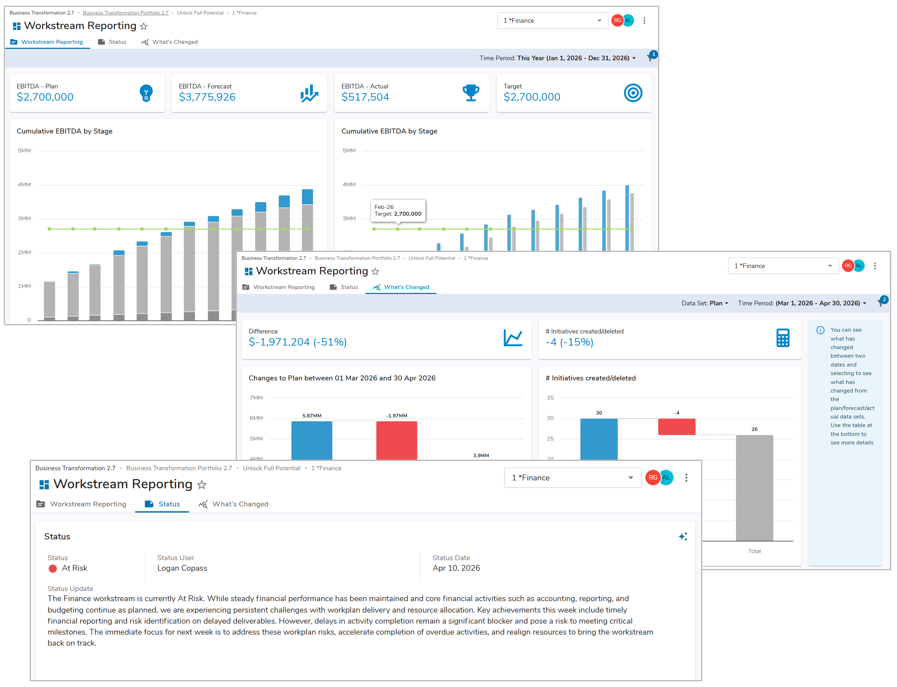
This perspective helps them ensure that their Workstream’s Initiatives are contributing appropriately to the broader program, while also providing context for prioritization and decision-making. While they are not responsible for managing the full Program, this visibility is essential for maintaining alignment and accountability.
Workstream
The Workstream level is the primary area of ownership for this persona. Here, Workstream Teams manage the execution and performance of their functional domain, ensuring that all Initiatives within the Workstream are aligned, progressing, and delivering value.
They use the Strategy tab to track Workstream Objectives and ensure alignment to corporate goals, monitoring status and trends to identify areas that may require attention. The Workstream tab provides visibility into aggregated benefits and Initiative progress, helping them assess performance and contribution to overall program targets.
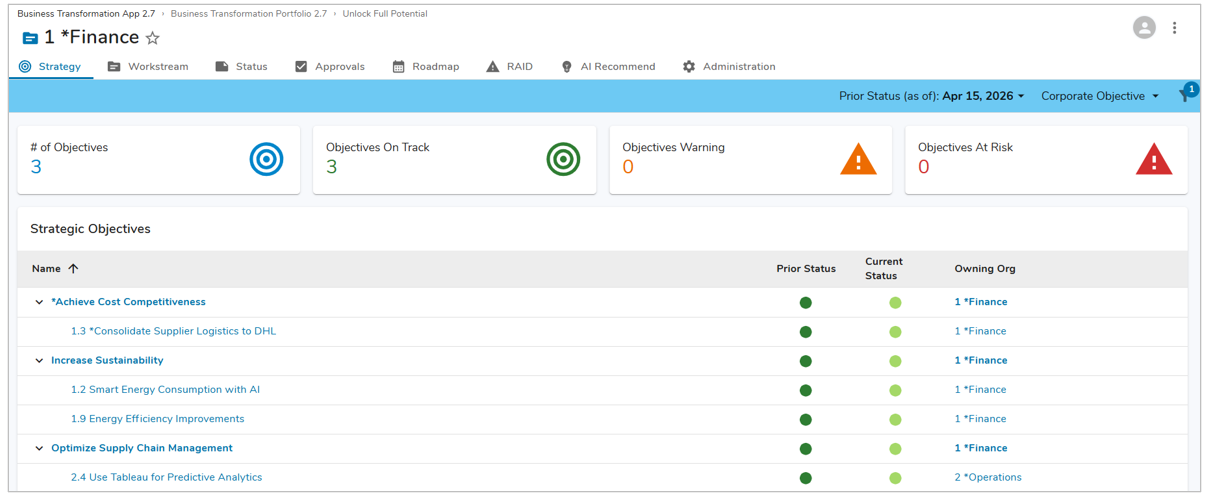
Workstream Teams also engage with governance processes at this level. Through the Approvals tab, they review and approve Initiatives as part of stage gate processes, ensuring that each Initiative meets quality standards and aligns with strategic priorities before progressing.

Execution planning is supported through the Roadmap tab, where they visualize timelines, milestones, and dependencies across Initiatives.
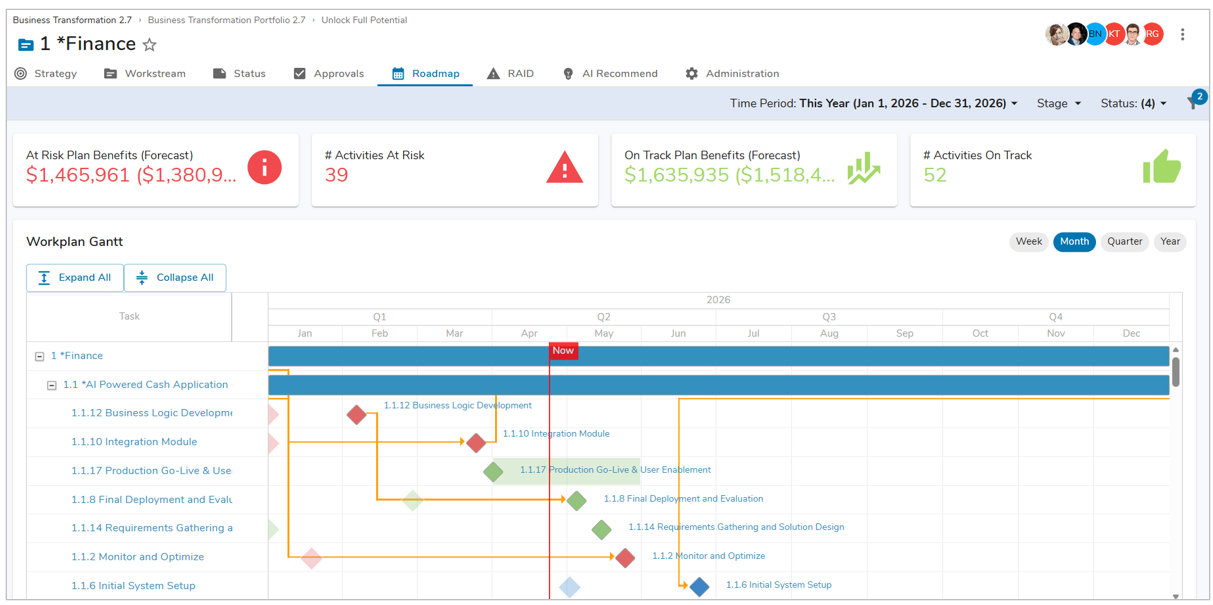
Additionally, the RAID tab provides visibility into risks, issues, and decisions, enabling proactive management of challenges that could impact delivery.

Initiative
At the Initiative level, Workstream Teams act as both reviewers and overseers. They evaluate Initiative details—including business cases, financial impacts, timelines, and alignment to objectives—to ensure that each Initiative is well-defined and positioned to deliver value.
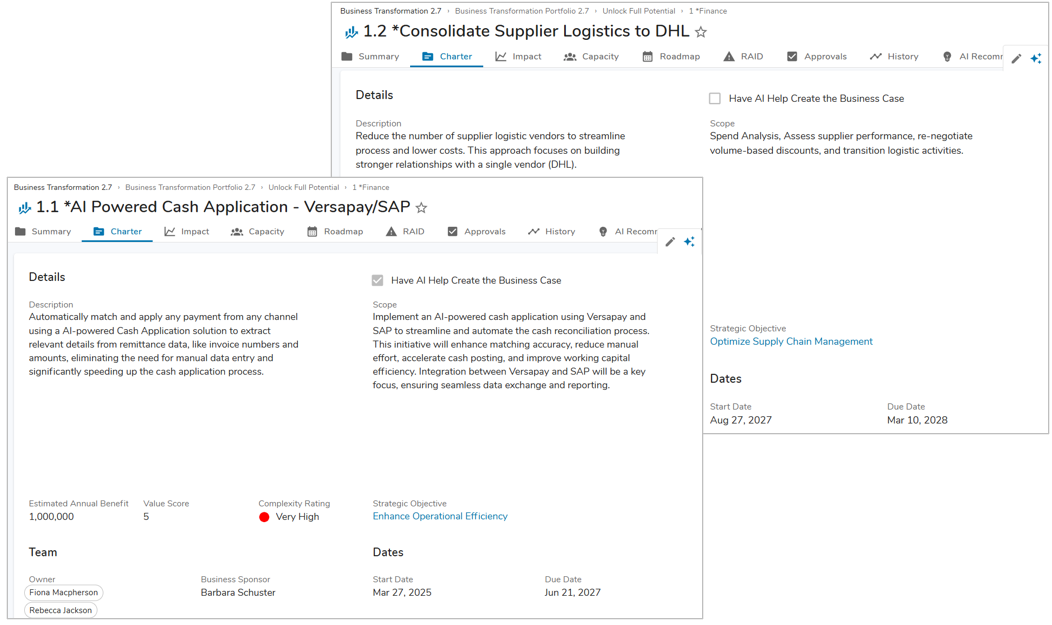
They actively participate in stage gate approvals, serving as a key checkpoint before Initiatives move forward. This gatekeeping responsibility ensures consistency, quality, and alignment across all work within the Workstream.
Beyond governance, Workstream Teams monitor Initiative execution by reviewing progress, financial performance, and status updates. They focus on how each Initiative contributes to improving efficiency, reducing risk, or enhancing outcomes within their functional area, and intervene when adjustments are needed to keep work on track.
Activity
While execution is often driven by Initiative Owners or delivery teams, Workstream Teams maintain visibility into Activity-level details to ensure that work is progressing as expected. Activities provide the granular tasks, timelines, and dependencies that underpin each Initiative.
By leveraging this level of detail when needed, Workstream Teams can validate progress, identify potential delays, and ensure that execution plans are realistic and aligned with overall Workstream timelines—without needing to manage individual tasks directly.
Value to the Workstream Team
The BT solution enables Workstream Teams to effectively manage their domain within a broader transformation program. By providing both high-level visibility and detailed execution insights, it allows them to balance strategic alignment with operational control.
Through structured governance and approval processes, Workstream Teams can ensure that all Initiatives meet defined standards before advancing, maintaining quality and consistency across their portfolio. At the same time, integrated financial and performance tracking helps them understand how their Initiatives contribute to overall program success.
With clear visibility into risks, timelines, and dependencies, they are better equipped to proactively manage execution and address challenges before they impact outcomes. Ultimately, the solution empowers Workstream Teams to drive meaningful results within their area while staying aligned to the organization’s strategic goals.
In Practice
A Workstream Team member begins their week by reviewing the Workstream tab to assess Initiative performance and overall contribution to program targets. Noticing an Initiative trending behind plan, they drill into the details to review financials, timeline, and associated RAID items.
Later, they evaluate a new Initiative submitted for approval, reviewing its business case, expected impacts, and alignment to Workstream and Strategic Objectives before approving it through the stage gate. Throughout the week, they reference the Roadmap and Activity details as needed to ensure execution stays on track—stepping in to address risks or adjust priorities to maintain progress and deliver expected outcomes.