
Overview
Initiative Teams use the Business Transformation (BT) solution in Shibumi to define, execute, and deliver specific transformation efforts. They are responsible for building and managing Initiatives from initial business case development through execution and value realization.
This persona ensures that each Initiative progresses through stage gates, is supported by a well-defined workplan, and delivers measurable results aligned to Strategic Objectives. By maintaining accurate and up-to-date information, Initiative Teams enable transparency, support governance, and contribute directly to the overall success of the transformation program.
How Initiative Teams Engage with the BT Solution
Program
At the Program level, Initiative Teams engage primarily for context and alignment. They use high-level views to understand how their Initiative contributes to broader Strategic Objectives and program targets.
This visibility helps ensure that their work remains aligned to organizational priorities and provides insight into how their Initiative fits within the larger portfolio. While they are not responsible for managing Program-level data, this perspective informs their planning, reporting, and decision-making.
Workstream
At the Workstream level, Initiative Teams align their efforts within a specific functional domain. They reference Workstream Objectives and performance to ensure their Initiative supports the broader goals of that area.
This level also provides important context for governance and collaboration. Initiative Teams work closely with Workstream Owners during stage gate approvals, incorporating feedback and ensuring that their Initiative meets expectations before progressing. The Workstream view helps them stay aligned with priorities, timelines, and dependencies across related Initiatives.
Initiative
The Initiative level is the core area of ownership for this persona. Here, Initiative Teams define and manage all aspects of their Initiative, from business case creation through execution and performance tracking.
They begin by developing the business case within the Charter tab, outlining the Initiative’s scope, objectives, expected outcomes, and alignment to Strategic Objectives. Supporting documentation can be attached to provide additional context for reviewers during the approval process.

Once defined, Initiative Teams manage financial performance through the Impact tab, where they log and track benefits and costs. This enables them to measure overall results and demonstrate return on investment over time.

To move the Initiative forward, they actively push it through stage gates using the Summary and Approvals tabs—submitting for approval, responding to feedback, and ensuring all required information is complete and accurate.

Execution planning is managed through the Roadmap tab, where they define milestones, Activities, and dependencies. This workplan serves as the foundation for tracking progress and ensuring timely delivery. As execution progresses, Initiative Teams collect and update information from Milestones and Impacts, ensuring that status, timelines, and financials reflect current performance.
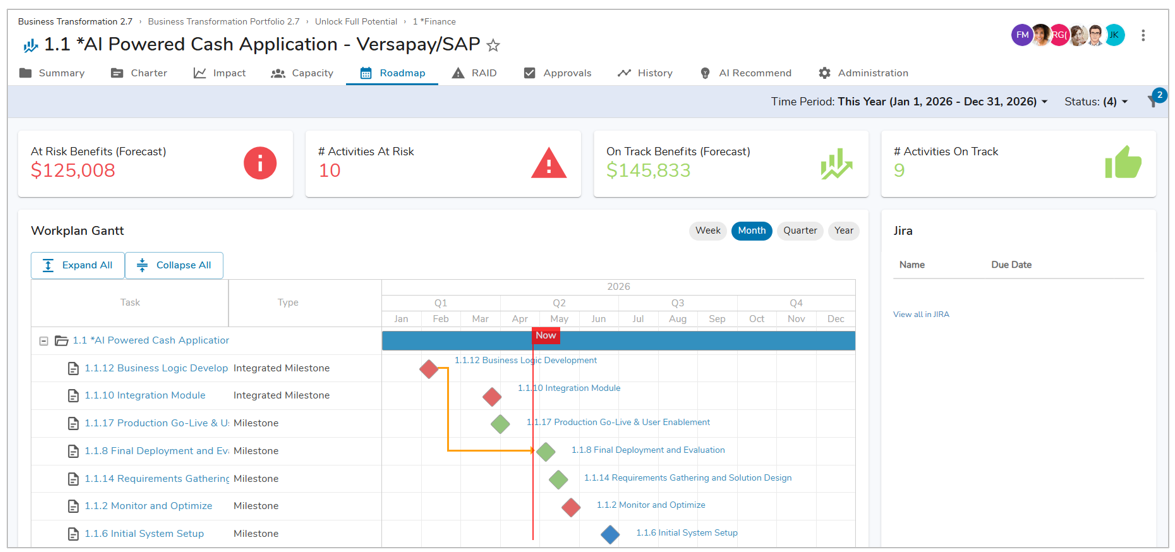
Additionally, they monitor and manage risks, assumptions, issues, and decisions within the RAID tab, ensuring that potential challenges are documented and addressed proactively.

Activity
At the Activity level, Initiative Teams manage the detailed execution of their work. Activities represent the specific tasks required to deliver milestones and complete the Initiative.
Teams update Activity status, maintain timelines, and define dependencies between tasks to ensure a coordinated and realistic execution plan. This level of detail supports accurate tracking and enables Initiative Teams to quickly identify and address delays or bottlenecks.

The Activity structure ensures that all progress reported at the Initiative level is grounded in real, actionable work, providing transparency and accountability throughout the execution process.
Value to the Initiative Team
The BT solution provides Initiative Teams with a structured framework to plan, execute, and measure their work effectively. By centralizing all Initiative data—including business case details, financial impacts, timelines, and risks—it creates a single source of truth that supports both execution and governance.
Built-in stage gate processes guide Initiatives through a consistent lifecycle, ensuring that key decisions are made with the right level of oversight. At the same time, detailed planning and tracking tools enable teams to manage execution with clarity and precision.
With clear visibility into how their Initiative contributes to Strategic Objectives, Initiative Teams are better equipped to focus on delivering meaningful outcomes. The ability to measure and report results ensures that value is captured and communicated effectively across the program.
In Practice
An Initiative Team begins by defining a new Initiative, building out the business case in the Charter tab and outlining expected benefits and costs. Once ready, they submit the Initiative for approval through the stage gate process, incorporating feedback from Workstream Owners and stakeholders as needed.
After approval, they develop a detailed workplan in the Roadmap, creating milestones and Activities to guide execution. Throughout the lifecycle of the Initiative, they regularly update progress, financial impacts, and RAID items—ensuring accurate reporting and alignment. As results are realized, they track performance against Strategic Objectives, demonstrating the value delivered and supporting overall program success.