
Overview
Transformation Teams use the Business Transformation (BT) solution in Shibumi to oversee, structure, and sustain the success of the overall program. They play a central role in ensuring that transformation efforts remain aligned, measurable, and on track—bridging the gap between executive strategy and operational execution.
In addition to monitoring performance, this persona is responsible for establishing and maintaining the foundational elements of the program, including Strategic Objectives, Workstreams, and Impacts. They also support governance processes and enhance visibility by creating dashboards and reporting views tailored to different stakeholders.
How Transformation Teams Engage with the BT Solution
Program
At the Program level, Transformation Teams operate as primary owners and administrators of the transformation structure. They define and maintain Strategic Objectives within the Strategy tab, ensuring that all program activity is anchored to clear, measurable goals.

They actively monitor overall program performance using the Program tab, tracking aggregated benefits across Plan, Forecast, and Actual data sets, and ensuring alignment to program targets.

The Pipeline tab is used to shape the future of the program—reviewing early-stage initiatives, identifying gaps to target, and guiding prioritization efforts in partnership with Executives.

Transformation Teams also play a key role in defining and managing Impacts through the Impacts tab, ensuring that value is consistently measured and categorized. On the cost side, they monitor financial discipline through the Budget tab, tracking spend against plan.

Governance is a critical responsibility at this level. Through the Approvals tab, Transformation Teams participate in stage gate reviews, ensuring that initiatives meet defined criteria before progressing. They also monitor approval flow to prevent bottlenecks and maintain program momentum.

To support visibility and decision-making, they frequently leverage and configure dashboards—either directly within the Program or through custom reporting—to provide tailored insights for Executives and Workstream Owners.
Workstream
At the Workstream level, Transformation Teams ensure that the program structure is properly defined and aligned. They are responsible for creating and organizing Workstreams, typically based on functional areas such as Finance, HR, or IT, and ensuring each Workstream is connected to the appropriate Strategic Objectives.
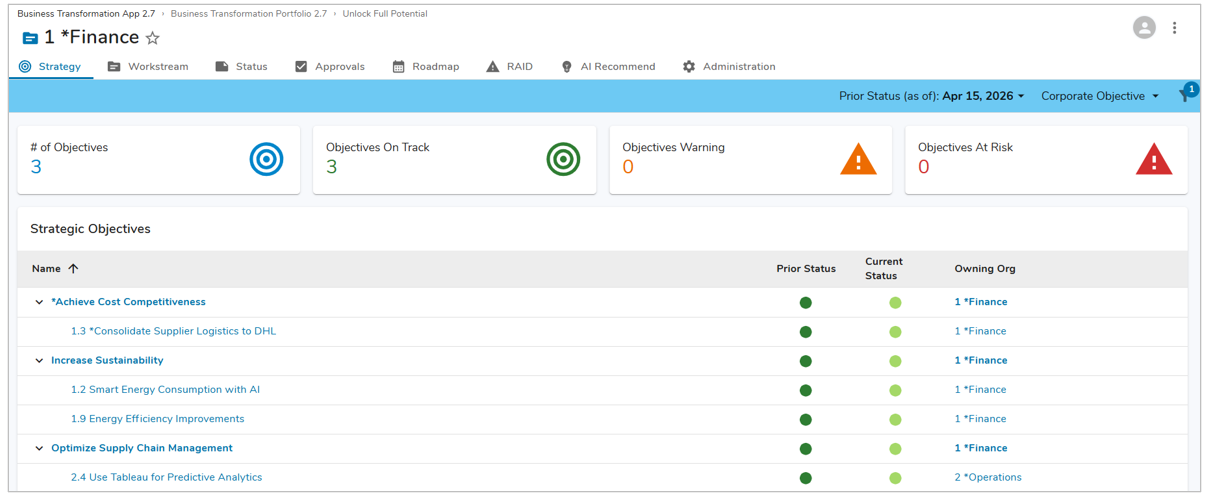
They monitor Workstream performance by reviewing aggregated initiative data, identifying areas that may be underperforming or deviating from plan. This allows them to proactively engage with Workstream Owners to address gaps, rebalance priorities, or refine focus areas.
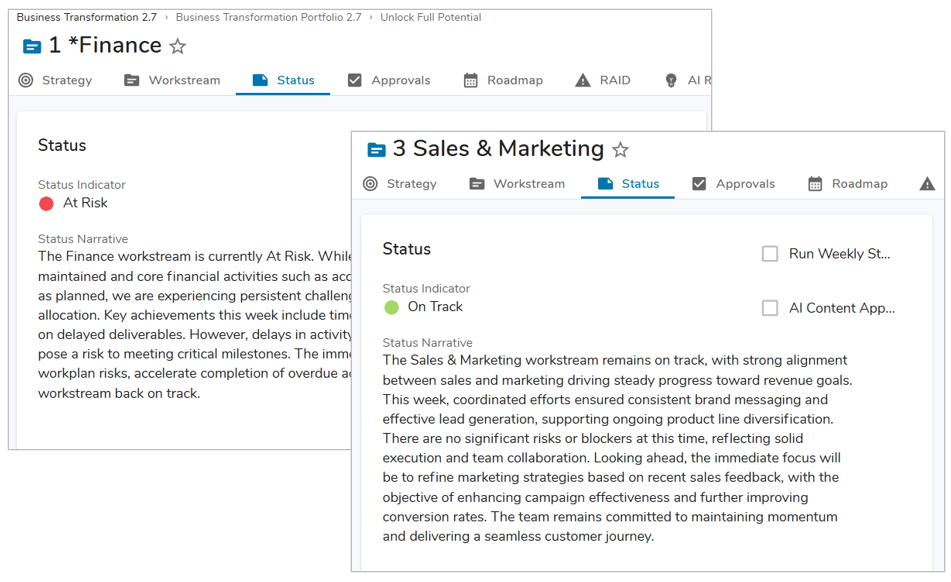
Additionally, they help ensure consistency in how Workstreams operate—supporting governance, alignment, and reporting standards across the program.
Initiative
At the Initiative level, Transformation Teams are actively involved in governance and quality control. They participate in stage gate approvals, reviewing Initiative business cases, expected impacts, and alignment to Strategic Objectives before approving progression, typically at the Workstream Approval tab.

They also ensure that Initiatives are properly defined, with clear financial impacts, realistic timelines, and appropriate linkage to Workstreams and Objectives. Where needed, they may guide Initiative Owners in refining scope, improving data quality, or strengthening alignment to program goals.
Through this oversight, Transformation Teams help maintain a high-quality pipeline of initiatives that collectively drive program success.
Activity
While not directly responsible for managing Activities, Transformation Teams rely on this level to ensure execution integrity. Activities provide the detailed breakdown of work that supports each Initiative, and their presence ensures that progress reported at higher levels is backed by actionable plans.
By maintaining visibility into execution through aggregated views, Transformation Teams can validate that timelines, dependencies, and progress updates are being managed effectively, without needing to engage in task-level management.
Value to the Transformation Team
The BT solution provides Transformation Teams with the structure and visibility needed to effectively manage complex transformation programs. By centralizing all program data, it enables them to maintain a consistent framework across strategy, execution, financials, and governance.
This structured approach ensures that Strategic Objectives, Workstreams, and Impacts are clearly defined and consistently applied, creating alignment across all levels of the organization. Built-in governance tools streamline the approval process, helping maintain quality and accountability as initiatives progress.
Additionally, the ability to configure dashboards and reporting views allows Transformation Teams to deliver targeted insights to different stakeholders, improving communication and supporting better decision-making across the program.
Ultimately, the solution empowers Transformation Teams to proactively manage performance, enforce standards, and ensure that the program delivers measurable, sustained value.
In Practice
A member of the Transformation Team begins their week by reviewing the Program tab to assess overall performance against targets, followed by a check of the Pipeline to identify any gaps in expected value. Noticing a shortfall, they collaborate with Workstream Owners to refine existing initiatives and encourage new idea generation aligned to Strategic Objectives.
Later, they review pending items in the Approvals tab, evaluating Initiative business cases and confirming alignment before approving progression through stage gates. As part of ongoing program support, they also update key dashboards to ensure Executives and stakeholders have clear, relevant insights—helping drive alignment, accountability, and informed decision-making across the transformation.